
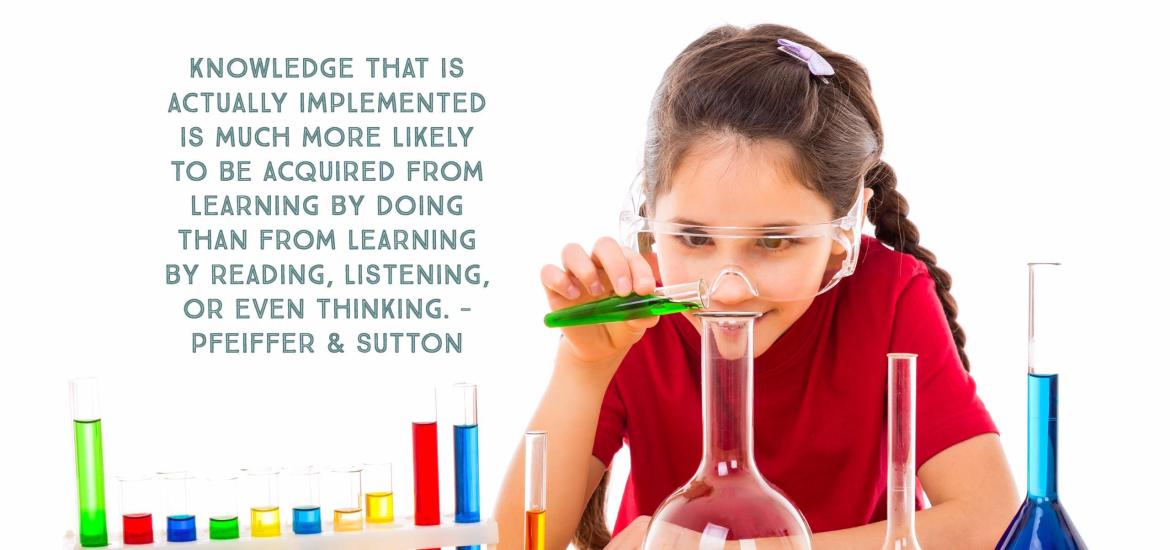
Livingstone (2009) describes a pedagogical shift from a rule-based model of education to a more immersive model of ‘learning through doing,’ (Livingstone, 2009:86). Phillip (2007) and Heppell (2006) agree with this and recognise key shifts in education towards a more learner centred approach and a teacher in a facilitator role. These shifts could be attributed to the advances in technology and popularity of applications (apps). The Oxford Dictionary defines a computing application as ‘a program or piece of software designed to fulfil a particular purpose.’ These applications are often referred to as ‘apps,’ which can be used to enhance and enrich the classroom experience. Edwards (2012) describes 3 levels to the utilisation of technology, one of which aims to enhance learning opportunities. However, as Rai (2008), highlights that it is important to also consider if the technology advances are pushed by vendors of technology or educators.
Beach and O’Brien (2015) reflect on Dickens and Churches (2011) who agree that ‘students will learn from participating in activities,’(2015:6) suggesting Kolb’s theory of experiential learning that we learn through experience and reflection. They suggest that it is key to begin with the activity to best achieve the learning objectives and then consider ‘those apps that afford the best engagement and learning,’ (2015:5). In considering this, the app ‘Sumaze! Primary’ supports Mathematical Reasoning skills in Maths. The app is primarily developed to support individuals and provides learners with intrinsic rewards to move up to the next level if they succeed. This would fit Skinner’s behavioural approach to learning and suggest that learners would be motivated to continue as more levels are unlocked. However, to succeed each level, learners must apply their prior mathematical knowledge which would fit a Vygotsky’s constructivist approach where learners are building on their prior knowledge to gain a deeper understanding. Salmon (2004) refers to McDermott (1999) who emphasises that thinking is clearly the key to making information useful. The ‘Sumaze! primary’ app encourages learners to think, use their prior skills and knowledge to reason and solve the problem.

The ‘Sumaze! Primary,’ app is designed to allow learners with opportunities to apply their skills. Puentendra (2012) refers to the SAMR (Substitution, Augmentation, Modification, Redefinition) model, which encourages the use of new technologies to enhance or transform learning. The ‘Sumaze! Primary,’ app provides augmentation for problem solving tasks which can enhance learning opportunities. This is an effective way of thinking about how we use technology in the classrooms. Puentendra (2006) encourages teachers to evaluate the use of technology and develop more higher levels of teaching and learning opportunities. However, as Hamilton et al (2016) identified this model may be misleading for teachers, ‘rather than enhance pedagogy and practice,’ (2006:10). The SAMR model gives primacy to technology over good teaching and as Kaye (2017) suggests true integration of technology takes place when the focus is the activity, not the tool. Rai (2008) agrees that it is common ‘to get carried away with the technical aspects,’ and that the focus should be ‘placed on sound pedagogical principles,’ (2008:90).

Kaye (2017); Harasim (2012) suggest that technology can be used more collaboratively to fit more of a social constructivist approach. It would be ideal to use ‘Sumaze! Primary,’ not necessarily how it was intended as a single user game, but more collaboratively as a group. A group could work together, sharing, discussing ideas to solve each problem. This is a clear example of how the use of apps can be explored to maximise learner opportunities beyond the original aims of the app.

Using this app as a group would fit Cunningham’s (1996) 2 tenets of constructivism viewing learning as constructing knowledge and teaching as a process which supports the construction of knowledge rather than the role of communicating knowledge. The role of teacher becomes facilitator which Heppell (2006) recognised as a key shift in education. Ferster (2014) would agree that the teacher’s role is to facilitate solving the problem and provide gentle support for learners to explore (Dixon, 2019). This approach would allow learners to collaborate and share knowledge, using ‘Sumaze! Primary,’ as well as develop their mathematical literacy skills. This collaboration from learners is also supported by Ingle and Duckworth’s (2013) model SPACE (Sharing, Personalisation, Accessibility, Communication, Engagement) as the benefits that technology can bring to general pedagogy. This collaborative learning will provide greater learning opportunities, which Jenkins (2006) describes as distributed cognition (Dixon, 2019). This would allow learners to distribute their knowledge and consolidate their understanding. Harasim (2012) also coined the term collaboratives as a new learning theory which focusses on collaborative learning, however this is very similar to constructivism ideals with a digital context.

Collaborative learning requires opportunities for a more interactive and active teaching and learning approach. Chi et al (2001) found that students showed a deeper understanding ‘as a result of them taking more control of their learning,’ (2001:98). This is supported by Salmon (2004) who found a key stage of the 5 developmental model as ‘taking control of their own construction in new ways,’ (2004:29). Therefore, through the use of ‘Sumaze! Primary,’ being used more collaboratively learners will be encouraged to actively take control of their knowledge and understanding. Grabinger and Dunlap (1995) emphasise the needs of learners to take an active role in forming new understandings through advocated discovery or inquiry learning around a real context. ‘Sumaze! Primary,’ provides a context for applying prior skills which can be optimised when used in a collaborative and more active approach. This is an example of how technology can enhance teaching and learning skills to benefit learners. Haywood and Hutchings (2017) would agree that it is not the technology but how the tool is used to facilitate learning which is more important.
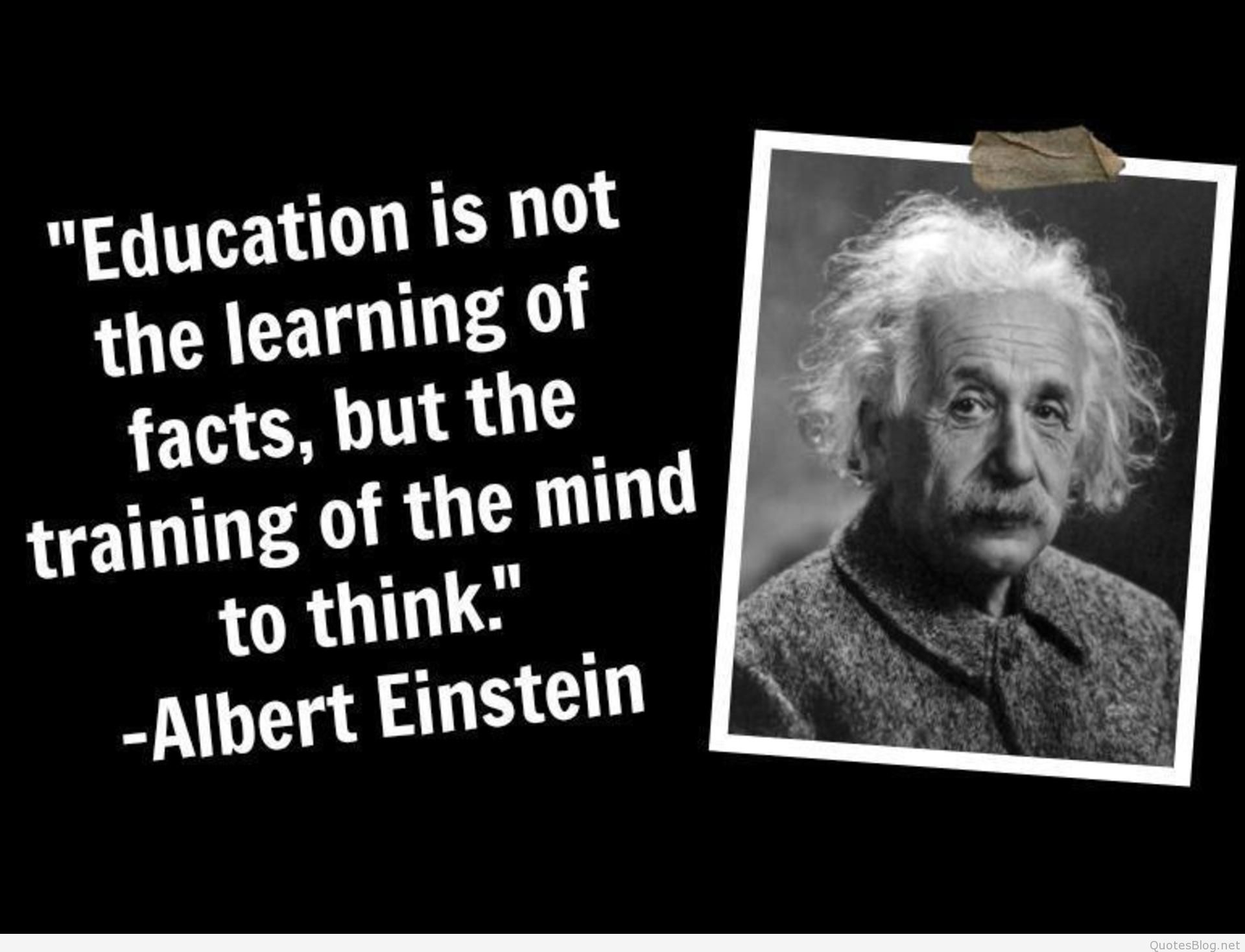
 Use of the app Sumaze! Primary