

The National Curriculum (2014) outlines statutory guidelines on the expectations and outcomes of teaching and learning in Mathematics in Key Stage 1. There are three key aims of the Mathematics curriculum briefly outlined below:
-become fluent in the fundamentals of Mathematics,
-reason mathematically by following a line of enquiry,
-solve problems by applying their mathematics

Within the Purpose of Study for Key Stage 1 it outlines:
“A high-quality mathematics education therefore provides a foundation for understanding the world, the ability to reason mathematically, an appreciation of the beauty and power of mathematics, and a sense of enjoyment and curiosity about the subject.” (National Curriculum, Purpose of Study 2013:3).
There is an importance on the ability to reason mathematically. Nunes et al (2009) argues that such skills support deep and sustainable learning and enable pupils to make connections in mathematics. This can be perceived as beyond solving problems but the ability to discuss and explain reasons for their answers. This extends the purpose of study for Maths as being more than purely knowledge-based but gaining a wider understanding. Hudson (2018) reflects on Muller (2016) who argued that ‘mathematical thinking and associated processes of creative reasoning are central to the know and how of mathematical knowledge, (2018: 385). Lithner (2008) also agrees that mathematical reasoning can have many functions in Mathematics. However, it is important to question the amount of curriculum time spent on mathematical reasoning at Key Stage 1 and the confidence of teachers in developing mathematical thinking opportunities. The Scottish government recognised this as an area of weakness and developed a project to ‘Develop Mathematical Thinking in the Primary Classroom,’ in collaboration with teachers. On completion of the course, all teachers spoke with enthusiasm in terms of ‘gaining confidence in the teaching of mathematics in the classroom. (Hudson et al, 2012:14).

PISA (Programme for International Student Assessment) describes employing mathematics as involving ‘mathematical reasoning and using mathematical concepts, procedures, facts and tools to derive a mathematical solution’ (PISA, 2012:25). This supports Vygotsky’s constructivist approach and views learners as active problem solvers who develop prior knowledge to derive a new solution. PISA also link in the idea of Mathematical Literacy, which can be described as a synonym of mathematical reasoning, focussing on the ‘capacity to formulate, employ, and interpret mathematics in a variety of contexts. It includes reasoning mathematically and using mathematical concepts, procedures, facts and tools to describe, explain and predict phenomena.,’ (OECD, 2013: 17). There is a clear value placed on Mathematical reasoning internationally, however in 2015 Jane Jones (National Lead for Mathematics) lead a primary conference and found that ‘tasks are not used well enough to develop reasoning,’ (2015: Slide 26). It was also highlighted that ‘of the three National Curriculum aims, it is the least well developed currently,’ (2015: Slide 26). Jones (2015) refers to progression maps created by NCETM (The National Centre for Excellence in the Teaching of Mathematics), to aid reasoning. Although, these resources are useful, they are not statutory and therefore may not be used by all schools.
NCETM describe mathematical reasoning as thinking through maths problems logically. However, Jones (2015) recognises that problem-solving skills need to be explicit and more focussed on the skills required, rather than the content. This implies that meta-cognitive skills must be taught explicitly to support learners in developing their reasoning skills.
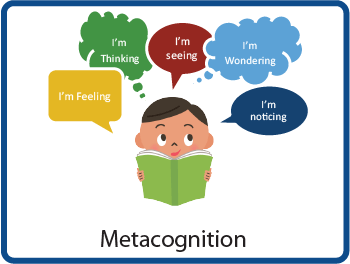
Mevarech et al (2006) refer to the National Council of Teachers of Mathematics (2000) who recognise ‘the importance of developing students’ meta-cognition as a means for improving students’ mathematical problem solving and reasoning,’ (2006: 86). Therefore, the skills required to mathematically reason must be taught to enable learners to succeed in Mathematics. Nunes (2009) agrees that the ability to reason mathematically is the most important factor in a pupil’s success in mathematics. Biesta (2012) also refers to the point of education is never simply that children learn, but that they learn something for a purpose. Therefore, it is important that learners develop their reasoning skills to be able to apply their learning effectively for a range of purposes. The ‘Sumaze! Primary’ app would provide opportunities for learners to apply their mathematical reasoning and problem solving skills in an interactive way. The app could also be used as a teaching tool to teach learners how to mathematically reason. This blog aims to delve further into the benefits of using ‘Sumaze! Primary,’ as a teaching tool.
 Use of the app Sumaze! Primary